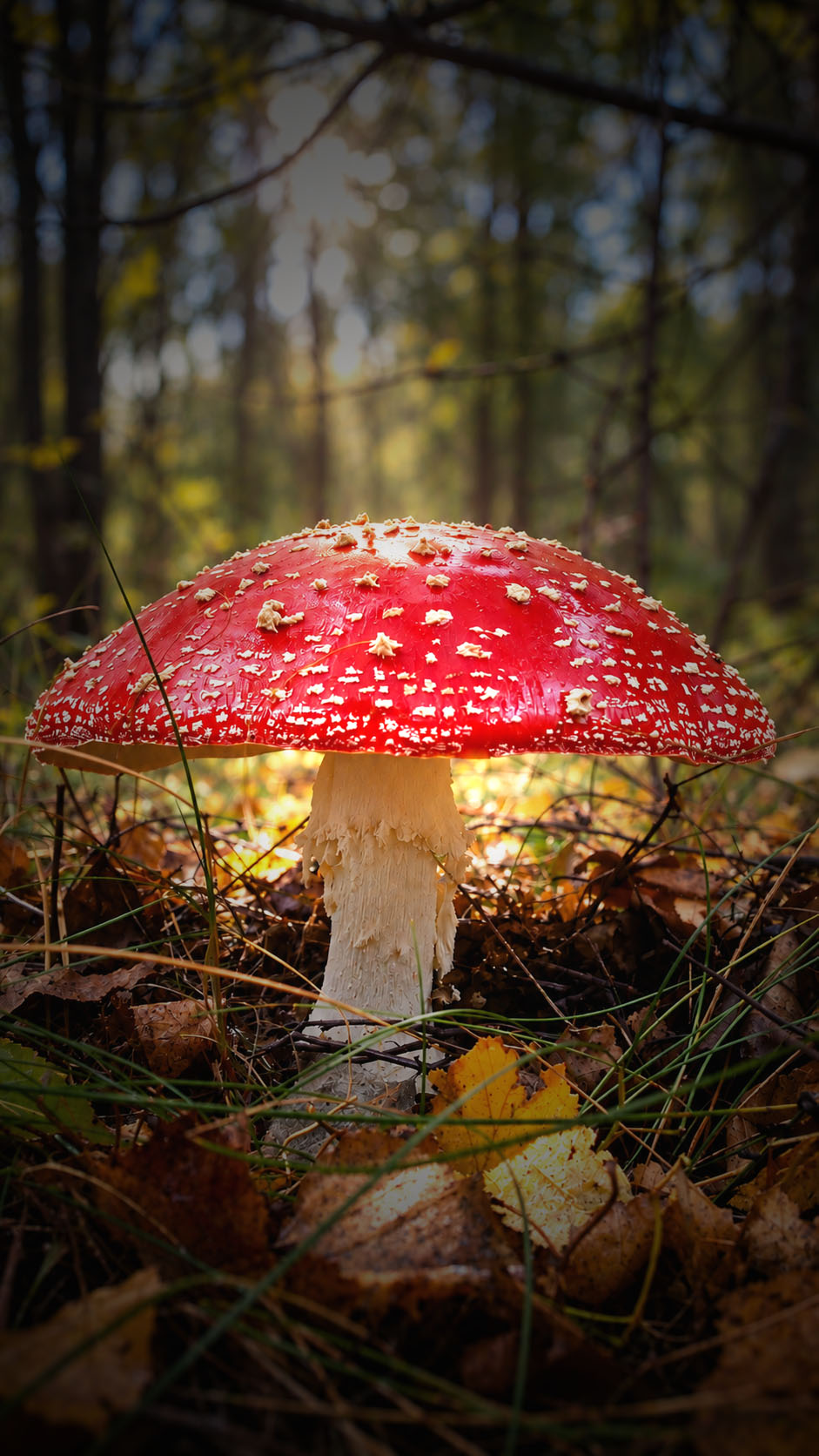
👑 As mentioned previously, the “Red Queen” is found throughout much of the world, with the exception of South America and Australia—although it does occur there as an introduced species. It primarily forms symbiotic relationships with birch, spruce, and pine trees, but it is by no means limited to these species. A fully expanded cap can range from 5 to 30 cm in diameter (the largest I have personally found measured 23 cm). One source claims that the gills beneath a medium-sized, 7 cm cap may contain around 575 million spores. How anyone managed to count them remains a mystery—but let’s take their word for it.
👑 It stubbornly resists domestication: it cannot readily be cultivated at home and normally grows only in association with living trees in the wild. However, if you have birch or spruce trees in your garden, you might try to “tame” it by introducing spores into the soil around them.
👑 Interestingly, many sellers place an exaggerated value on young, unopened, spherical caps (around 5 cm in diameter), marketing them as “Top Grade,” “Premium,” or “Extra Class” and charging the highest prices for them. Yet these young caps are not necessarily the most chemically mature specimens. Fully expanded, disc-shaped caps may differ considerably in composition from immature ones, regardless of whether they measure 5 or 25 cm across. In other words, marketing terms such as “Premium” or “Top Grade” should not automatically be taken as evidence of greater potency or quality.
👑 It is also worth noting that mushrooms growing within the same forest or young woodland can vary considerably in chemical composition depending on their exact growing conditions. Factors such as habitat, associated tree species, developmental stage, weather, and sunlight exposure may all contribute to this variability.
👑 The stems are often considered less desirable than the caps. Biologically, however, the stem is much more than a simple “elevator”: it supports the cap and forms an integral part of the fruiting body through which water and nutrients are distributed during development.
👑 Very young fruiting bodies—those that have only just emerged from the volva—are sometimes described as having a pleasant texture and flavour when cooked. However, Amanita muscaria contains ibotenic acid and muscimol, and eating it without appropriate preparation can cause poisoning, so it should not be treated as an ordinary edible mushroom.
👑 It stubbornly resists domestication: it cannot readily be cultivated at home and normally grows only in association with living trees in the wild. However, if you have birch or spruce trees in your garden, you might try to “tame” it by introducing spores into the soil around them.
👑 Interestingly, many sellers place an exaggerated value on young, unopened, spherical caps (around 5 cm in diameter), marketing them as “Top Grade,” “Premium,” or “Extra Class” and charging the highest prices for them. Yet these young caps are not necessarily the most chemically mature specimens. Fully expanded, disc-shaped caps may differ considerably in composition from immature ones, regardless of whether they measure 5 or 25 cm across. In other words, marketing terms such as “Premium” or “Top Grade” should not automatically be taken as evidence of greater potency or quality.
👑 It is also worth noting that mushrooms growing within the same forest or young woodland can vary considerably in chemical composition depending on their exact growing conditions. Factors such as habitat, associated tree species, developmental stage, weather, and sunlight exposure may all contribute to this variability.
👑 The stems are often considered less desirable than the caps. Biologically, however, the stem is much more than a simple “elevator”: it supports the cap and forms an integral part of the fruiting body through which water and nutrients are distributed during development.
👑 Very young fruiting bodies—those that have only just emerged from the volva—are sometimes described as having a pleasant texture and flavour when cooked. However, Amanita muscaria contains ibotenic acid and muscimol, and eating it without appropriate preparation can cause poisoning, so it should not be treated as an ordinary edible mushroom.